The Unseen Work: Making a Decade of Product Accessible to Everyone

Role: Product Lead for the accessibility compliance programme, from first customer requirement to full conformance
Timeline: Work began in 2024 with full EU Accessibility Act compliance by the beginning of 2026
The problem
In 2024, two of our largest enterprise customers, Accenture and Siemens, raised accessibility requirements. It was one of the first times a customer had asked, and it exposed an uncomfortable truth: the platform had evolved continuously for around ten years, and accessibility had never been a requirement along the way. A decade of accumulated UI decisions, none made with WCAG in mind, doesn’t get fixed with a sprint of bug tickets.
The timing made it urgent. The EU Accessibility Act was approaching enforcement, meaning what started as a customer request was about to become a legal obligation across our largest market.
The strategy: prioritise by user reality
Faced with a decade of remediation across the whole platform, the first decision was where not to start. We split the work into two journeys:
- The learner journey, which accounts for 95% of our users
- The admin journey, used by a far smaller group, far less frequently
We prioritised the learner journey without apology. Compliance programmes fail when they treat every screen as equally important; ours succeeded because it treated user impact as the sequencing principle. The admin journey followed, but 95% of our users saw the benefit first.
Fix the system, not just the screens
The defining decision of the programme was refusing to treat accessibility as a remediation project. Retrofitting every existing screen would have consumed the effort, and then the very next feature would have reintroduced the problem.
So we did two things in parallel:
We built a WCAG 2.2 Level A and AA compliant design system. Every component, pattern, and interaction in the system meets the standard by construction, which means every future feature built from it is compliant by default. This converted accessibility from a recurring cost into a property of how we build.
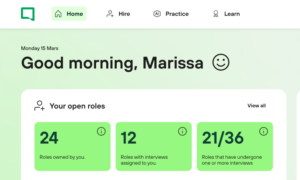
We remediated existing screens in order of touchpoints. Rather than working through the platform section by section, we ranked pages by how often users actually touch them and started at the top: the home page, the content explore page, and the learning page. The highest-traffic parts of the journey reached compliance first, so the impact curve front-loaded.
Compliance as a commercial asset
Accessibility work is often framed as a cost centre. For an enterprise product, it’s the opposite: it’s a deal requirement.
I led multiple VPAT assessments (Voluntary Product Accessibility Templates, the standard document enterprise buyers request in procurement) and shared them with our large enterprise customers. That turned our compliance work into tangible sales collateral: instead of assuring customers we took accessibility seriously, we could hand their procurement teams the evidence in the format their processes expected.
The clearest proof of the commercial stakes came from Siemens, where our accessibility work formed part of their application to the German works council, the employee body whose approval is required before software can be rolled out to staff in Germany. Our compliance evidence wasn’t a nice-to-have in that process; it was part of what allowed the platform to be deployed at all. For the customers who had originally raised the requirement, that closed the loop on their ask; for every future enterprise deal, it removed a silent blocker.
The results
By the beginning of 2026, the platform was in full compliance with the EU Accessibility Act, and so was our development process, meaning conformance is maintained by how we work, not by periodic cleanup. The design system ensures new work ships accessible; the VPAT assessments give enterprise customers documented evidence; and a requirement first raised by two customers became a durable capability for all of them.
What I learned
Accessibility is the definition of unseen work: when it’s done well, most users never notice, and the users who depend on it simply get to use the product like everyone else. The instinct on a compliance programme is to start fixing. The leverage is in deciding what “fixed” means. Treating accessibility as a property of the design system rather than a backlog of defects meant we solved the problem once, permanently, and for everything we build next. And sequencing by user touchpoints, not by org chart or code structure, meant the programme delivered real user impact from its first month rather than saving it all for a final milestone.